
Community Engagement|
 September 18, 2025
 By Kelli M. Warshefski
Opportunities Abound
Longtime partnership between OU students and Leader Dogs for the Blind continues to thrive


Robert Hall
While many find a wagging tail and furry affection comforting, for some, it’s a necessity. Guide dogs are an essential mobility tool for those who are blind or have low vision, offering them the confidence and independence to travel safely and independently. Thanks to organizations like Leader Dogs for the Blind (LDB), people who are blind can feel empowered with help from a guide dog.
For more than a decade, Oakland University has been partnering with LDB, from students raising puppies to implementing lean practices in their facilities. It’s a collaboration that is ever evolving as students help LDB expand and enhance their mission, and in return are provided service learning and outreach opportunities.
 |
|---|
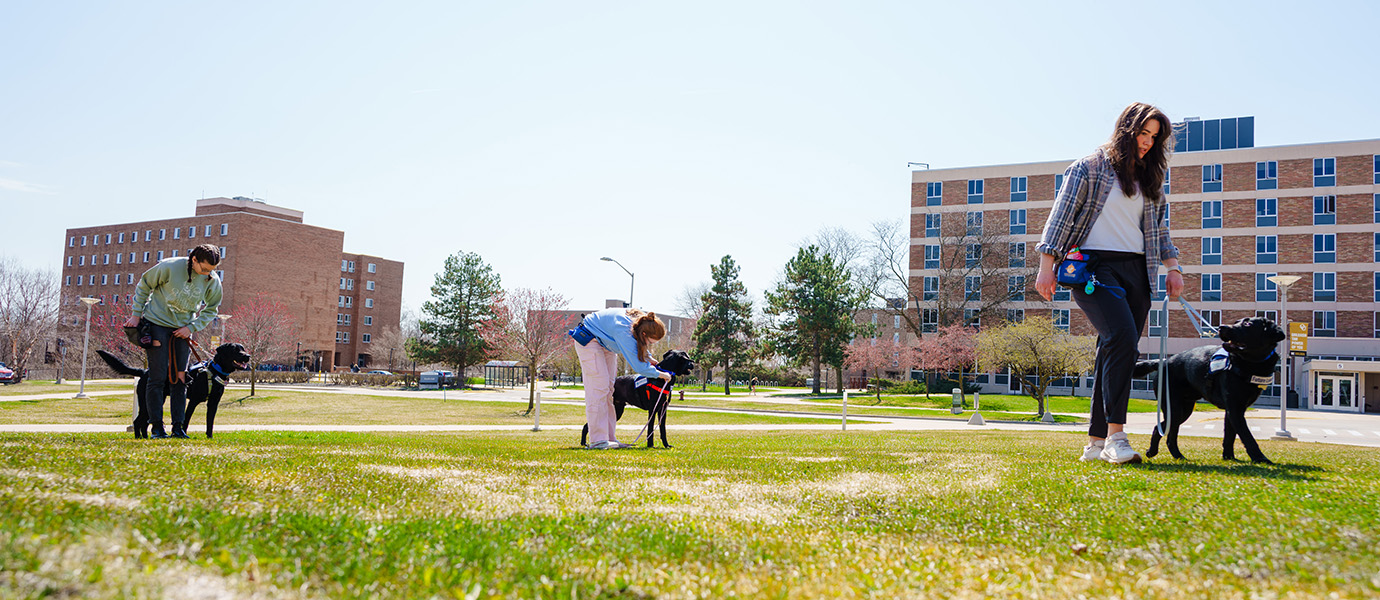
| Oakland University students train their Future Leader Dogs on campus. Stephanie Collino (left), mechanical engineering major, raised Hero from February-August of 2025; Eleanor Kuntz (center), biomedical sciences major, raised Pluto for five months; Mackenzie Reese Nichols (right), biomedical sciences and biology major, has been raising Henry since July of 2024. |
Raising Puppies and Awareness
Born through aligned values to better the community, the Future Leader Dog at Oakland University student group was founded in 2019, stemming from a newly formed partnership between The Honors College and Leader Dogs for the Blind. The club advocates for LDB by educating OU students on their puppy raising program. “That founding year we welcomed three Future Leader Dogs onto campus, and we have been growing in members and outreach ever since,” says Mackenzie Reese Nichols, CAS ’23 and ’25, honors college graduate and former president of Future Leader Dogs at OU.
 |
|---|
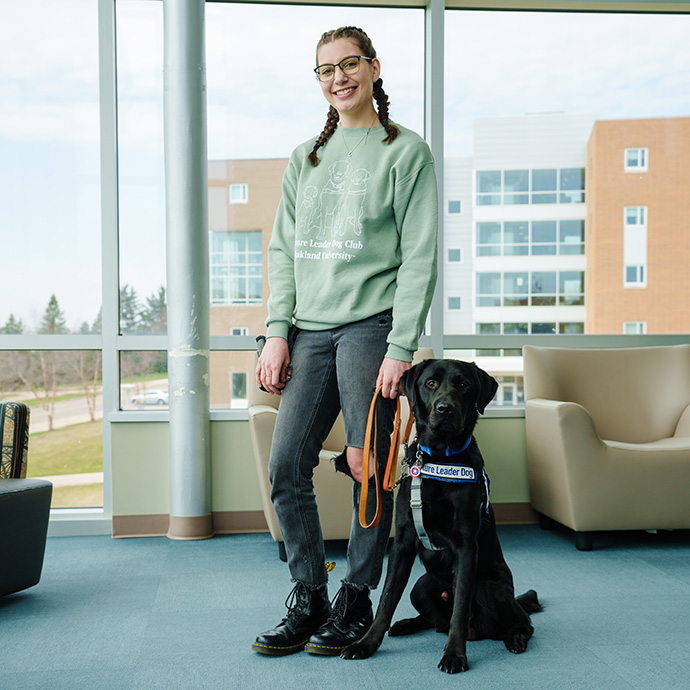
| Stephanie Collino with her Future Leader Dog, Hero. |
The LDB puppy raisers care for a puppy for 12 to 15 months, building a foundation of love and care for the Future Leader Dogs that helps set them up for success. According to the LDB Impact Report, the financial responsibilities that come with raising a puppy are taken care of by “the generous support from grantors and a gift from Nestle Purina,” so that “[OU] puppy raisers receive all supplies, veterinary care and dog food for free,” making the program financially accessible to all OU students.
The assistance that the Future Leader Dogs at OU club provides LDB to help go beyond raising puppies, though. The student group seeks to advocate for those who are blind or low vision and promote inclusivity through educational events on campus. In the winter of 2025, the student group boasted a membership of 272, consisting of puppy raisers and campus buddies who are trained to puppy-sit when needed.
 |
|---|
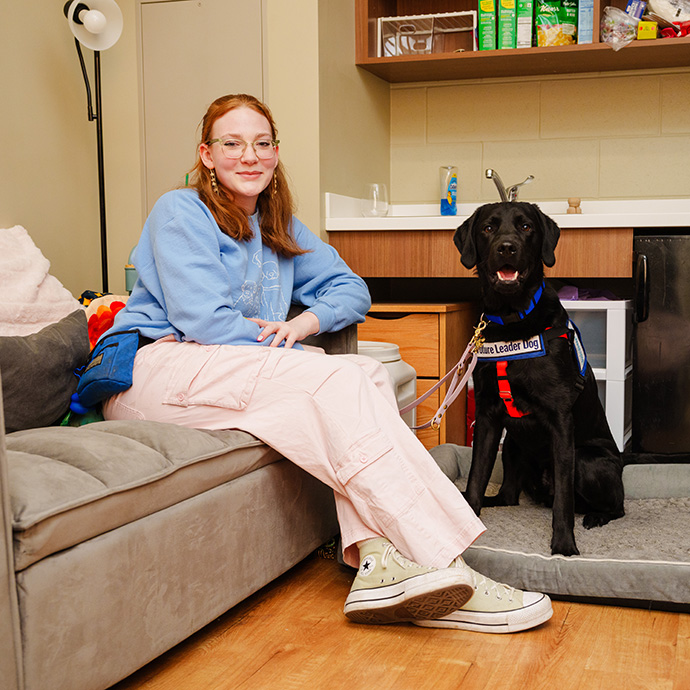
| Eleanor Kuntz lives in the Oak View Hall dorms with her Future Leader Dog, Pluto. |
Since its inception, the Future Leader Dogs at OU have helped LDB raise 30 puppies. But not all are destined to become guide dogs. Once the puppies return to Leader Dog, they undergo rigorous training, with about 33% becoming leader dogs. Those that do not make it to be a Leader Dog and are career changed either pursue related work with partner organizations or are then adopted out to loving homes, while the ones that do are paired with someone who is blind or low vision.
“It was important for me to become a puppy raiser because there is a massive international shortage of guide dogs,” explains Nichols, who raised four Future Leader Dogs as an OU student. “The ability to travel safely and independently is something I personally have taken for granted throughout my life, and I wanted to ensure that this ability was available for other college students.”
 |
|---|
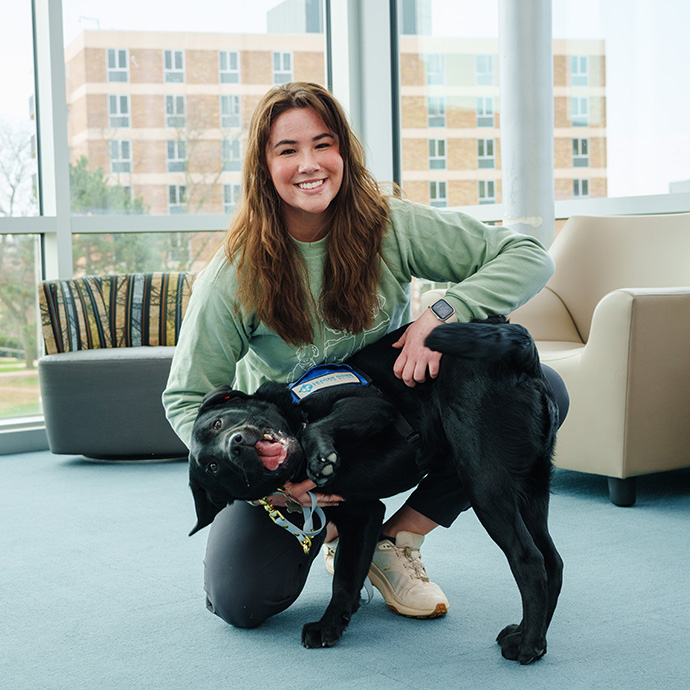
| Mackenzie Reese Nichols with Future Leader Dog, Henry. |
Since 2018, The Honors College has been pivotal in maintaining and enhancing the university’s partnership with LDB. Most recently, Nichols enlisted the help of Dean Graeme Harper, Ph.D., along with a handful of other leadership on campus, to welcome its first puppies to live on campus with their puppy raisers. This was not only a big step for the Future Leader Dogs at OU club, but for the community partnership as well.
“Support of OU's senior administrators has been so fabulous for making our partnership successful," says Dr. Harper, who also sits on the Leader Dogs for the Blind Ethics Committee. "Glenn McIntosh, Steve Mackey, Cora Hanson and Kevin McDougall, to name just a few. Recently our own OU Director of Admissions, Shane Lewis, has even been assisting Leader Dog with their admissions policies."
“OU students want to contribute to both their own success and the success of others,” he continues. “The Honors College-Leader Dog partnership is a partnership that shows what OU students can do, both as responsible and empathetic citizens of the community, the nation and the world, and as individuals.”
 |
|---|
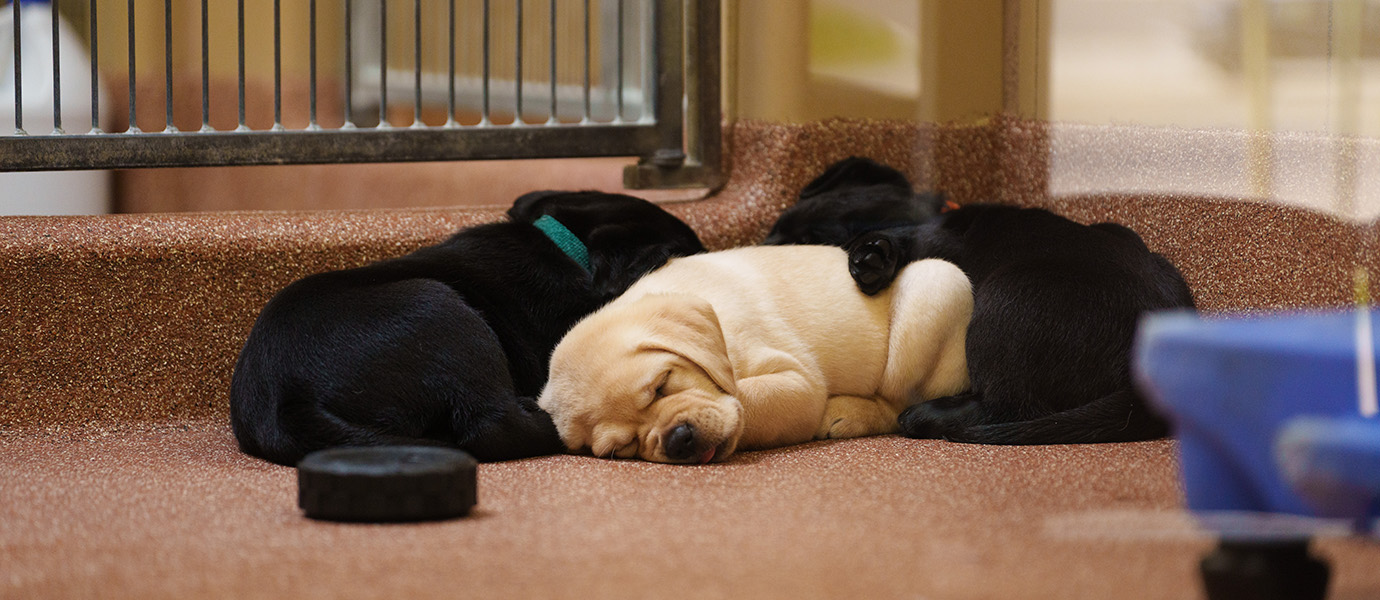
| Leader Dogs for the Blind has their own breeding program. A Leader Dog mom births her puppies in a volunteer host's home, and around 7 weeks of age, the puppies are brought to the Leader Dog campus. |
Learning Through Service
Oakland University students are connecting in other unique ways with Leader Dog, beyond the work of The Honors College and Future Leader Dogs at Oakland University, “LDB became the very first group of external partners for the School of Engineering and Computer Science senior design projects,” explains Michael A. Latcha, Ph.D., associate professor of mechanical engineering. “We began developing and building puppy litter transport units for Leader Dogs for the Blind in the winter 2015 semester, then revisited them for refinement in the fall 2016 semester.”
 |
|---|
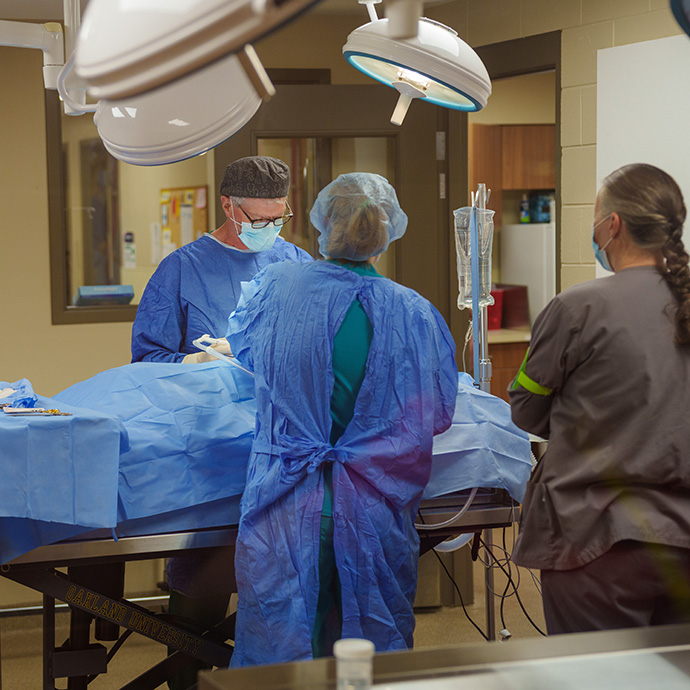
| Veterinary surgeons use surgical tables specially designed for LDB by School of Engineering and Computer Science students. |
The puppy litter transport units were a necessity for puppies weighing less than five pounds who could not properly regulate their body temperatures. Since Future Leader Dogs are born offsite in the homes of volunteers, LDB needed a safe way to transport them back to their campus for veterinary check-ups. The SECS senior design project students were able to develop three units that helped maintain the puppy’s internal temperatures and, in turn, the overall health of the Future Leader Dogs. Additionally, SECS students have designed new surgical tables for the organization’s veterinary clinic, as well as a navigational map of the Canine Development Center.
The Pawley Lean Institute also works with LDB as part of their Community Service Internships course. From 2022-23, three projects were initiated — each containing two students and two mentors — for Future Leader Dogs and the organization’s veterinary clinic.
 |
|---|
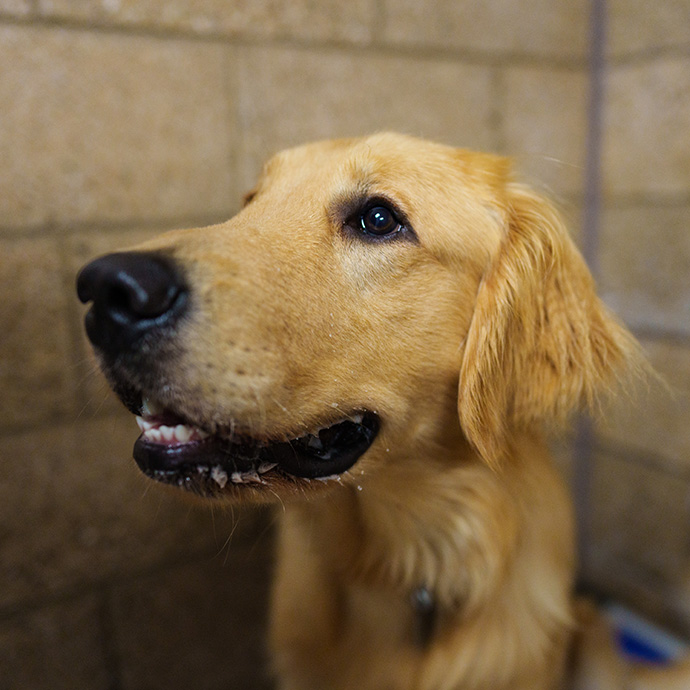
| This golden retriever is in training to be a Future Leader Dog in the LDB Canine Development Center. |
“Projects were lean-oriented, allowing students to see the value of a community service organization, earn money for the project, as well as update their resumes,” says Dennis Wade, director of the Pawley Lean Institute. “Leader Dogs for the Blind was able to implement the project recommendations for improvement within their organization.”
The Pawley Lean Institute partners with for-profit businesses to sponsor internships in lean management principles. As the gatekeeper, Wade then connects with nonprofit organizations to find areas that are looking to help improve their processes. Interns for LDB have had a hand in implementing user-friendly puppy raising applications, a cart system for their canine care team and a stoplight system for their veterinary clinic.
“We have been fortunate to host three cohorts of interns from the Pawley Lean Institute, each contributing to improvements in our processes and service delivery,” says Melissa Weisse, President and CEO of Leader Dogs for the Blind. “It has been a rewarding collaboration with lasting impact.”
“Leader Dogs for the Blind and Oakland University have built a strong, enduring partnership grounded in shared values of service, education and inclusion,” she adds. “We have been fortunate to have advocates like Dr. Ora Pescovitz and Dr. Graeme Harper who make disability rights and awareness a key component of the OU student experience, helping us to expand our mission and outreach to a new generation.”
 |
|---|
Alumni
As of 2024, 15% of the staff and 30% of the LDB's Board of Trustees are Oakland University graduates.
 |
|---|
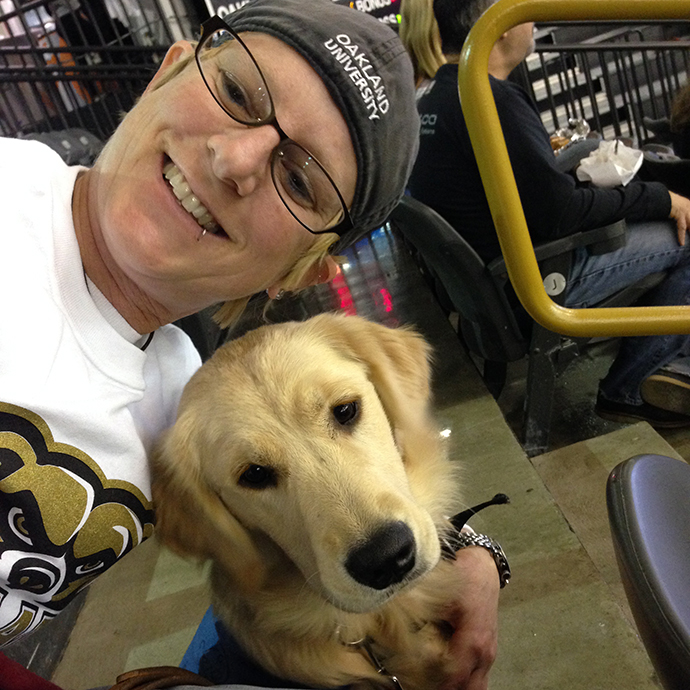
| Cheryl Sacrates, CAS ’13, with Future Leader Dog, Aizlyn, in 2014. |
“After working in accounting for years, I went back to school for something I enjoyed: graphic design,” says Cheryl Sacrates, CAS ’13, Graphic Designer – Marketing Coordinator for Leader Dogs for the Blind. “I love dogs, so when I saw a job posting [at Leader Dogs for the Blind] while completing my education at Oakland University, I thought it was the perfect fit.”
“I’ve often heard that people come for the dogs, but stay for the people,” she adds. “It’s so true. The dedication by our team to empower people who are blind or visually impaired inspires me.”
“Leader Dogs for the Blind and Oakland University have built a strong, enduring partnership grounded in shared values of service, education and inclusion.”
Melissa Weisse, President and CEO of Leader Dogs for the Blind
Robert Hall


©2025 Oakland University William Beaumont School of Medicine✎