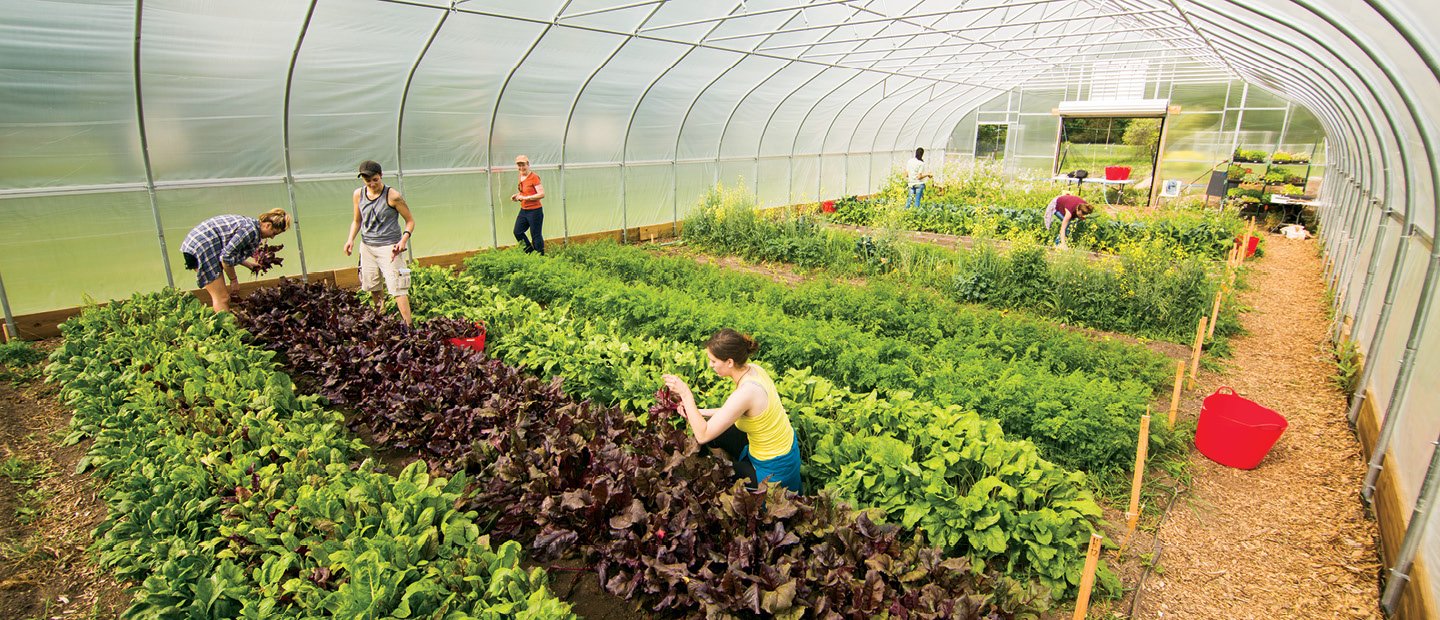
Campus Student Organic Farm
MAP to Campus Student Organic Farm
Nourishing the local community through exceptional education and community engagement programs, fresh, healthy food, and plenty of fun!
The Campus Student Organic Farm
and Growing Grizzlies present:
CAMPUS FARMSTAND
WEDNESDAYS: Sep 16 - Oct 14
10 AM – 1:30 PM
Bell Tower Area*
Student-grown fresh veggies & herbs!
Colorful cut flower bouquets!
Hungry?
Check out the walking salads and organic baked goods!
*Inclement weather – event moves to OC Canopy
2026 Community Supported Agriculture Program FARM SHARE
!! SOLD OUT !!
The Campus Student Organic Farm (CSOF) is an academically based, bio-intensive, diversified vegetable farm, growing 40+ different types of vegetables, fruits, flowers, and herbs in accordance with USDA National Organic Program guidelines and best practices. Students, faculty, staff, community members (and potentially you!) all contribute their knowledge, skills, and time throughout the year to bring you a colorful, fresh, diverse, and healthy array of seasonal organic produce - all grown on campus by students!
The CSOF allows you to receive a weekly FARMSHARE of the bountiful harvests from our campus farm throughout the growing season through the Community Supported Agriculture (CSA) model. A FARM SHARE is approximately ½ bushel of farm produce, appropriate for two people. Shares will always include at least five different seasonal offerings. Our weekly FLOWER SHARE consists of a large seasonal bouquet of fresh-cut flowers. Shares are distributed via member pickup at the CSOF (3070 Butler Rd, Rochester, MI 48309-4475).
| Full Season Share | 16 wk: May 4 – Aug 17* | $400 |
|---|---|---|
| Early Summer Share | 6 wk: June 12 – July 17 | $170 |
| Late Summer Share | 6 wk: July 24 – Aug 28 | $180 |
| Fall Share | 4 wk: Oct 23 - Nov 12 | $100 |
| Flower Share | 6 wk: July 24 – Aug 28* | $75 |
*Exact start dates for produce shares (indicated by week) are tentative as they are weather-dependent
The CSOF Farm Share program will distribute shares by member-pick-up at the Student Organic Farm (3070 Butler Rd, Rochester, MI 48309-4475). Full Share pick-up is on Monday; all others are on Fridays. Monday or Friday pickup is optional for Flowers.
For more information about academic programs, class farm tours, or scheduling group activities at the farm, please contact:
Dr. Fay Hansen, Farm Director,
[email protected] or [email protected].
You can also check out the farm's Facebook account.
Q - What happens to the produce grown at the Campus Student Organic Farm?
Our priority is to provide fresh produce to OU students. This is achieved through our Grizz Greens donations to the Growing Grizzlies Pantry, our Fall Campus Farmstand, and “farmer food,” which is available to students taking classes or working at the farm. Faculty, staff, and community members may purchase Farm Shares and visit our farmstand. We also sometimes provide produce to local food providers when feasible.
Q- How can members of the OU Community be involved with the farm?
Students and faculty/staff may be involved through enrollment in our classes, volunteering individually or in groups, and internships. We also hire students for our farm crew. Special projects and activities can be arranged for other classes or campus organizations.
Q - Can members of the non-campus community be involved with the farm?
Yes, we welcome community members as volunteers and customers. Visitors need to be aware that this is a working farm, and attire and physical abilities should be taken into consideration. An adult must accompany visitors under the age of 16, and advance notification/permission is required.
Q - Do you give tours or workshops?
Tours and/or other specially requested workshops or demonstrations can be arranged for groups for a modest fee. We also participate in youth summer camp programs.
Q - Can I contact you for advice about home gardening?
No, while we absolutely support home gardeners, we unfortunately do not have the staff to provide individual problem-solving and recommendations. We would refer you to MSU Extension resources.
The farm grows over 50 varieties of fresh produce and cut flowers. Produce is harvested from our gardens and distributed to the campus community through our weekly summer/fall Campus Farm stand and through subscriptions to a Farm Share program.
Farm stand: Our student-operated Campus Farm stand is held weekly. The farm stand is located on the lawn near the Oakland Center and Elliot Tower. In case of inclement weather the farm stand will be located under the awning of the Oakland Center.
Farmshares: Produce is also distributed through our Farm Share program, which is based on the CSA (Community Supported Agriculture) model. A Farm Share consists of a weekly half-bushel share of the farm’s seasonal produce, consisting of 4-8 varieties of produce, depending on the season. Contact [email protected] for details on price, dates, and availability.
Feeding the Community: We offer our volunteers “farmer food” and donate produce to several nonprofit services in the area.
Grizz Greens: The farm donates fresh produce to the Golden Grizzlies Pantry.
Get hands-on experience at the farm, at the Campus Farmstand, or at events. Volunteer farming activities vary by the season and sometimes also include opportunities for artistic and/or communications and other skills associated with farm needs. Alternatively, you may send an email to [email protected] for more information.
Open Volunteer Time
FRIDAYS 10:00 AM – 1:00 PM (April 24, May 1, 8, 15, 22, June 5, 12, 19, 26)
SUNDAYS 4:00 PM – 5:30 PM (May 10, 17, 24, June 7, 14, 21, 28)
Information about open volunteer times for individuals, groups, campus and community members is scheduled on our calendar. In order to provide the best volunteer experience, it helps us if volunteers register in advance so that we can prepare our activities for that day and also notify them of cancellation or changes to plans. Scheduled activities may be cancelled or rescheduled due to weather or other considerations.
Additionally, scheduled volunteer times and activities for students and student orgs are communicated by the Growing Grizzlies. The student organization helps distribute produce on campus to students as well as local nonprofit organizations. They provide education and student/community engagement opportunities on food systems and health, including educational/demonstration events, speakers, film screenings, farm potlucks, campus events and more.
INTERNSHIPS AND COMMUNITY ENGAGEMENT:
The Campus Student Organic Farm also hosts interns from the Environmental Sciences (ENV), Integrated Studies Program and others.
WORK EXPERIENCES AT THE FARM:
“Many Hands Make Light Work: ” The Campus Student Organic Farm requires many hands and many skills. The farm offers student employment opportunities as farm crew during the extended active farm season (approx. 9 months), with additional part-time crew positions during summer and fall. These farm experiences offer students important real-life leadership and learning opportunities that prepare them for the workplace after graduation. Positions as Farm Assistant, Student Farm Manager, and Assistant Student Farm Manager are posted on Handshake (link). Students interested in a particular focus of food systems are encouraged to apply for Work Study positions at the farm.
We offer courses covering biology, ecology, food systems, human health, and more. This is a list of the undergraduate courses currently available:
- BIO 3360 - Organic Farming (lecture)
- BIO 3361 - Applied Organic Farming (lab & field studies)
- BIO 3362 - Permaculture
- BIO 3363 - Permaculture Laboratory
- BIO 4338/5338 - Food Systems Biology
The Organic Farming and Permaculture courses give Oakland students a hands-on learning opportunity that examines the relationships between food, fiber, and fuel production practices, as well as provides an understanding of sustainability and community health.
Courses are not just for students interested in biology, sustainability, nutrition, or farming. They provide an intersection between numerous disciplines and emphasize problem-solving, teamwork, and collaboration.
Several major concentrations, such as healthcare, education, business, marketing, and communications, could all benefit from the hands-on training that an organic farm has to offer.
We offer an Urban Agriculture and Agroecology Minor and also provide students with many opportunities to perform community service or complete a special project for their classes.
Transcript
The farm allows anyone to come and volunteer. Through that, there’s class periods, group discussions - family-style - where you really learn about the benefits of the food and the benefits that it does for the environment that you live in.
I think it’s really important to know where your food comes from and how to grow your own food, especially for emergency sake purposes. I think it’s just a safety thing that’s really good to know. I’m actually an education major. I have nothing to do with farming or anything like that but it’s kind of, more so, a hobby.
It’s something that anyone can be a part of whether you want to work hands-on or whether you want to do research or if you’re just interested in learning about being helpful and mindful of what you’re putting in your body.
We’re all pretty friendly, so we always like to support each other in what they’re doing and you have lots of different ideas and opinions around here and different backgrounds. Very few have the same major but we’re all interested in food and stuff like that.
I don’t know, it’s kind of just opened my eyes to a whole new world and it’s a cool and fun experience that I think anybody should come and at least learn a little bit of.
Department of Biological Sciences
118 Library Dr
Rochester, MI 48309-4479
(location map)
(248) 370-3550
fax: (248) 370-4225
[email protected]


Department of Biological Sciences
118 Library Dr
Rochester, MI 48309-4479
(location map)
(248) 370-3550
fax: (248) 370-4225
[email protected]