Community Health Engagement and Empowerment Research (CHEER) Lab
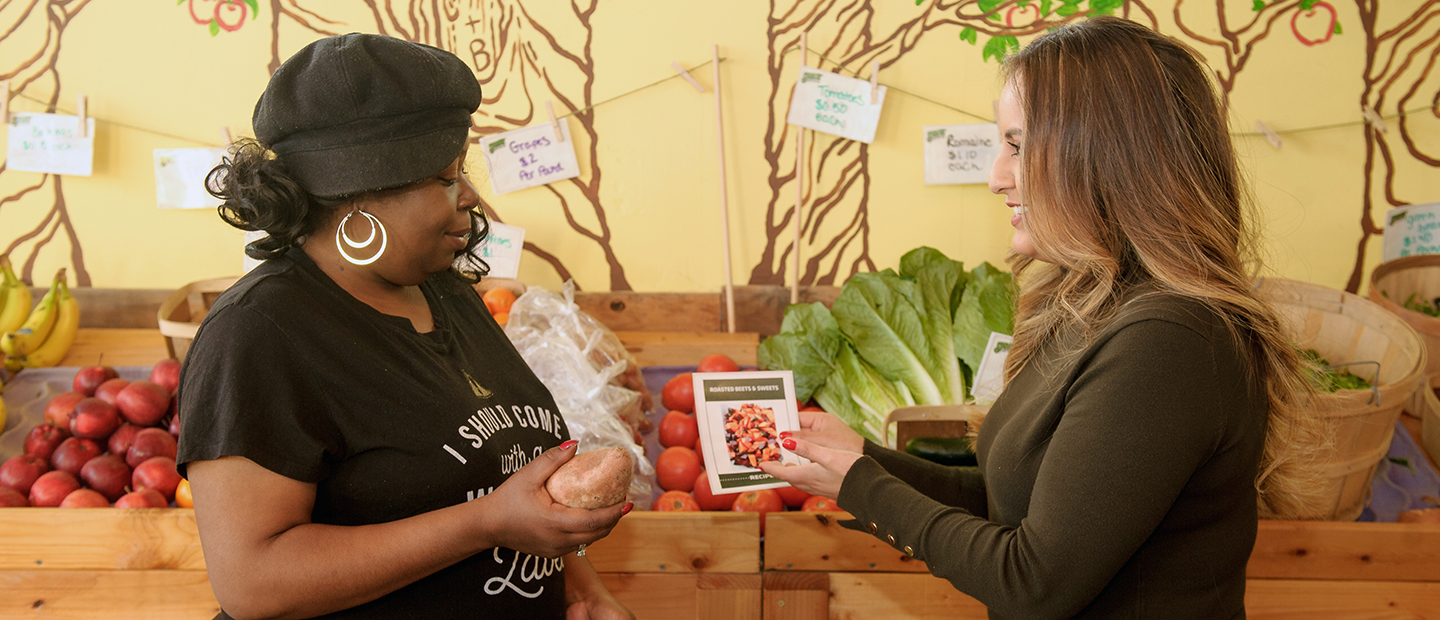
The Community Health Engagement and Empowerment Research (CHEER) Lab provides undergraduate students with hands-on research training and opportunities to work on faculty-led research projects from different health disciplines. Students work with community and academic partners, engage in professional networking, and gain valuable health research experience that complements pursuit of health careers and graduate training.
CHEER Lab is driven by the belief that every student deserves a chance to engage in research, regardless of their background or experience. The program makes research accessible through experience-based learning by connecting students with faculty-led projects while promoting a strong work-life-school balance.
The mission of the CHEER Lab is to provide OU undergraduate students with research skills training and opportunities to engage in real-world health research and service through faculty-led research projects. CHEER Lab aims to bring forth a framework of knowledge and curiosity that prepares students to impact community health and serve as leaders in a variety of health and wellness practices.
Benefits of joining the CHEER Lab include:
- Real-world experience: learn and strengthen research skills by engaging in projects with faculty
- Community engagement: contribute to research and programmatic interventions that address the needs of all individuals and populations
- Interdisciplinary collaboration: work with faculty across disciplines to create innovative health solutions
- Networking opportunities: develop relationships with peers, mentors and other professionals
- Personal growth: develop organizational, relational and collaborative skills
- Career and graduate school preparation: enhance your applications through research experience
The CHEER Lab involves two 0-credit courses. Students start with IPE 1020 - Research Skills Training. After completion of this course, students may enroll in IPE 3020 - Research Skills Applications.
IPE 1020 - Research Skills Training (0 credits)
Learning Modules
Upon joining the CHEER Lab, students will complete a sequence of learning modules to educate them on a variety of research skills. These modules include skills that will prepare students to engage in faculty-led research projects. Modules include Research Ethics and Conduct, Evidence and Literature, Data Collection Methods, Data Analysis Methods, and Sharing and Applying Findings.
Application Activities
Students will complete application activities that are in alignment with the learning modules throughout the semester to practice using research skills and to simulate a real-world research experience.
Weekly Meetings
Students will attend weekly group meetings. Some will be Research Skills Meetings, which will expand upon research skills through group activities and discussion. Others will be Journal Clubs, in which students read selected peer-reviewed journal articles on a variety of topics and engage in thoughtful group discussion.
IPE 3020 - Research Skills Applications (0 credits)
Prerequisite: IPE 1020
Work on Faculty-Led Research Projects
Students receive hands-on experience in health research. After completing the research skills training, students have the opportunity to work on faculty-led projects as a valued member of a research team.
Regular Meetings
Students will regularly meet with the CHEER Lab Director and Graduate Research Assistant. Students will also continue participating in a Journal Club, in which they will read selected peer-reviewed journal articles on a variety of topics and engage in thoughtful group discussion. The meeting times and location are to be determined.
Ongoing
Mentorship and Collaboration
Students will receive continued mentorship from the CHEER Lab Director and Graduate Research Assistant. Students will also have many opportunities to collaborate with other CHEER Lab students and faculty in the School of Health Sciences.
Through faculty-led research projects, the CHEER lab connects students with the School of Health Sciences and local organizations to help to create environments, opportunities, and resources that are conducive to improved health for all people. Discover current and past projects across disciplines.
Current Projects
Safe Routes to School
Faculty: Dr. Rebecca Cheezum (Public Health)
Student: Matilde Ribeiro
The team is seeking to understand barriers that prevent Royal Oak kids from biking or walking to and from school through surveys and street audits. With this information, they will engage with community stakeholders to address barriers and apply for funding through the Safe Routes to School program.
Short Form Pregnancy Education
Faculty: Dr. Tara Diesbourg (Environmental Health and Safety)
Student: Savanna Lavendar
This project uses engaging social media-style videos to help pregnant women understand what’s happening in their bodies and the reasoning behind common recommendations, to support informed decision-making and improve knowledge, engagement, confidence and self-advocacy.
Experiences of Weight, Diet and Lifestyle Changes following GLP-1 Agonists
Faculty: Dr. Amanda Lynch (Nutrition/Dietetics, Interdisciplinary Health Sciences)
Student: Eva Bush
For this study, researchers are seeking to describe and explain the changes in appetite, cravings and dietary intake as the result of taking GLP-1 agonists for weight loss. Furthermore, the study aims to explain how and why individuals decide to take weight loss medications.
A Decision-Making Aid for Persons with Spinal Cord Injury-related Chronic Pain
Faculty: Dr. Edward Rohn (Interdisciplinary Health Sciences)
Student: Mariam AbdElhamid
This study aims to understand shared decision-making (SDM) for chronic pain management in persons with spinal cord injury (SCI). The team has worked with patients and providers to video record clinic visits as patients and providers discuss treatments. Data gathered will help create an Option Grid that can be used to guide conversations on care plans, and will be piloted in a future project.
Tinkering: An Unacknowledged but Vital Interactional Skill in Health Care
Faculty: Dr. Christina Papadimitriou (Interdisciplinary Health Sciences, Sociology)
Students: Treasure Ly, Ava Romano
The researchers seek to describe the tinkering practices observed in video data among rehabilitation practitioners, patients with brain injuries and their care partners. Then, the team aims to develop a catalog of practices and model tinkering as an interactional skill.
Heart Rate Variability and Executive Function
Faculty: Dr. Joshua Haworth (Exercise Science)
Students: Marjan Saeed, Nadia Sokol
This study investigates the relationship between heart rate variability and executive function to further understand how physiological and cognitive systems interact.
Capsaicin-Induced Oral Stimulation on Balance and Movement Behavior
Faculty: Dr. Joshua Haworth (Exercise Science)
Students: Duaa Saeed, Sophia Desjarlais
The researchers aim to determine if using capsaicin to activate receptors that sense heat can increase sensory nerve firing and autonomic output, thus heightening physiological arousal and potentially having an impact on balance behavior.
Past Projects
Community Needs
Blight assessment in Pontiac
Faculty: Dr. Jennifer Lucarelli (Interdisciplinary Health Sciences, Nutrition)
Students: Carl Lozo-Lafferty, Zhuzhu Lozo-Lafferty, Noah Schepke, Tamara Salami, Fatima Syed, Lana Yassine
The research team is completing on-site blight assessment measurements, assessing properties and any structures on it, in Pontiac, Michigan neighborhoods to help the city with planning blight reduction strategies.
Community Health Needs Assessment in Pontiac
Faculty: Dr. Jennifer Lucarelli and Dr. Laurel Stevenson (Interdisciplinary Health Sciences)
In collaboration with Honor Community Health, OU faculty and students completed a comprehensive community health needs assessment.
Housing Insecurity and Access
Faculty: Dr. Jennifer Lucarelli (Interdisciplinary Health Sciences)
Student: Victoria Jobczyk
In preparation for a housing-related project that community partners have been interested in launching, this research team investigates local policies and practices related to access to low-income housing in Oakland County.
Nutrition
Understanding Nutrition Concerns in Young Women
Faculty: Dr. Kelley Borton (Nutrition/Dietetics)
Students: Emma Stryd
The research team seeks to understand the concerns of young women seeking treatment for anorexia nervosa, who have not received the services of a dietitian, to develop a patient-driven treatment approach for medical nutrition therapy.
Preparing a grant application/eventual data collection for a quantitative survey project assessing health behaviors in college athletes
Faculty: Dr. Emily Van Wasshenova (Interdisciplinary Health Sciences)
Students: Paige Eacker, Andrew Johnson
The project is still in the development stages, but the aim is to identify gaps in the literature on health behaviors and disordered eating in college athletes. If the grant is funded, the research team will collaborate with the OU Athletic Department for this project.
TechRx: Increasing Produce Prescription Efficacy
Faculty: Dr. Jennifer Lucarelli (Interdisciplinary Health Sciences, Nutrition)
Students: Michonni Ward, Christina Johnson, Haley Negri
Through existing research and Michigan-based produce prescription programs (PPRs), the team seeks to understand PPR program management and technology needs to build a collaborative, streamlined technology platform for PPRs. This will improve cost effectiveness, provide better evaluation data, and improve sustainability and reach.
SAFPAS — Support Application for Food Pantry Assistance and Support
Faculty: Dr. Melissa Reznar (Interdisciplinary Health Sciences, Nutrition)
Students: Brooke Gagnon, Noor Attar
The research team is performing formative testing of an app for food pantries to organize, manage and facilitate communication with clients.
Plant-based Diets in Health Care
Faculty: Dr. Melissa Reznar (Interdisciplinary Health Sciences, Nutrition)
Students: Molly Kajy, Joseph Rogowski
This study explores attitudes of physicians toward plant-based diets; the nature of physician counseling of patients on diet, especially plant-based diets; and patient experiences with plant-based diet adoption.
My COVID Response
Faculty: Dr. Jennifer Lucarelli and Dr. Laurel Stevenson (Interdisciplinary Health Sciences)
In collaboration with Lighthouse and dozens of community partners, the CHEER lab helped launch the My COVID Response emergency food delivery program, serving thousands of families throughout Oakland County.
Physical Activity
Hormones and Affective Change in Exercise (HACE) Study
Faculty: Dr. Kate Rougeau (Public Health, Wellness and Health Promotion)
Students: Kinda Al-Sanouri, Kimberly Campbell, Christina Johnson, Gianna Lovati, Sebastian Naman, Brooklyn Orozco, Orjona Shtalbi, Isabella Tamulevich, Lana Yassine, Linda Yousif
By using a custom built cycle ergometer (bike), the researchers will examine the effects of physical activity on hormones and emotional affect, as well as personality differences and behavior decision making during and following active and passive cycling.
VR and Affective Response to Active and Passive Cycling
Faculty: Dr. Kate Rougeau (Public Health, Wellness and Health Promotion)
Student: Jasim Bhatti
The aim of this study is to see if incorporating virtual reality (VR) to active/passive cycling could improve affective responses to physical activity.
Sheriff PAL (Police Athletic League) Program
Faculty: Dr. Jennifer Lucarelli and Dr. Laurel Stevenson (Interdisciplinary Health Sciences)
To assist with planning efforts, the CHEER Lab interviewed PAL families to assess program satisfaction and identify additional areas of need that could be addressed through local organizations and collaborations.
Health Care
mENTER
Faculty: Dr. Christina Papadimitriou (Interdisciplinary Health Sciences, Sociology)
Students: Hanna Gipson, Gianna Lovati, Natalie Otterbein
mENTER is a mobile-health (mHealth) peer navigator intervention that trains people with disabilities to become peer navigators who will empower adults with new physical disabilities to meet their community participation goals.
Developing a relationship-centered shared decision-making (SDM) assessment
Faculty: Dr. Christina Papadimitriou (Interdisciplinary Health Sciences, Sociology)
Students: Kinda Al-Sanouri, Achsah John, Allison Katz
The research team studies shared decision-making (SDM) among rehabilitation clinicians, patients with severe cognitive disabilities who cannot self-report and their caregivers to develop an observer assessment that would capture skills of SDM.
Shared Decision-Making in Spinal Cord Injury-Related Chronic Pain Management
Faculty: Dr. Edward Rohn (Interdisciplinary Health Sciences)
Student: Riyam Alnaseri
This study aims to improve understanding of how patients and clinicians communicate and make decisions around spinal cord injury (SCI)-related chronic pain management, in order to tailor an existing shared decision-making (SDM) aid to address chronic pain decision-making processes for persons with SCI and their health care professionals.
Global Health
A Multilevel, Multi-domain Approach to Evaluating Prematurity's Impact on Child Growth and Development
Faculty: Dr. Kwame Sakyi (Public Health)
Student: Abbas Al-Bermani, Ethan Mair
The research team aims to understand the trajectory of preterm birth on child growth and development in Ghana and how it can be addressed holistically. Researchers identify interventions for improving the growth and development of preterm babies and support qualitative data collection efforts in Ghana.
Peer navigation project relating to children with disabilities in Ghana
Faculty: Dr. Kwame Sakyi (Public Health)
Student: Savanna Lavendar
The researchers are examining how a temperature-detecting bracelet can assist preterm growth and development; health policy, specifically measuring unpaid care work and interventions to address them; and looking at peer-navigation for children with disability.
Do I have to be a student in the School of Health Sciences or interested in community health to participate in the CHEER Lab?
No! The CHEER Lab is open to students who are interested in a variety of topics and careers within all aspects of health.
What if I don’t have any research or statistics experience?
That’s ok! CHEER Lab introduces the basics; faculty generally do not expect undergraduate students to run statistical analyses.
How much of a time commitment is the CHEER Lab?
Students can expect to dedicate 3-4 hours per week to completing lab-related tasks in IPE 1020. Once students begin working on faculty-led research projects in IPE 3020, the time commitment will vary based on the project and student availability.
Why are CHEER Lab courses 0 credits?
0-credit courses provide evidence of the work you do by showing up on your transcript. 0-credit courses do not cost you any money to enroll.
Will a 0-credit course impact my GPA?
No, 0-credit courses do not impact your GPA. Students will receive a satisfactory grade based on completion of materials and engagement in the lab.
When can I join the CHEER Lab?
Students may join the CHEER Lab at any time during their undergraduate career. Applications are due in the second week of each semester. A student who applies for the CHEER Lab after the deadline will be considered for the following semester. Please fill out the interest form to apply!
How long can I be involved in the CHEER Lab?
The minimum length of participation is one semester to complete IPE 1020. Students may enroll in IPE 3020 for as many semesters as desired, pending approval by the CHEER Lab Faculty Director.
There is a specific project or topic that I want to research. Can I do that in the CHEER Lab?
It's great that you are passionate about a specific topic! The CHEER lab works on a model of students working on faculty-led research projects. It might be possible to work on a project that is closely related to your passion, but there's no guarantee that faculty will have projects available that are directly aligned with your topic.
Will the CHEER Lab help me with my class research papers and projects?
While the CHEER Lab is not a tutoring service, it will provide training on many skills and topics that will be helpful in completing school research assignments. In addition to completing research skills training, the CHEER Lab Director and Graduate Research Assistant can provide research skills-based support and guidance when completing tasks related to the CHEER Lab and faculty-led research projects. It can also help connect students to research opportunities.
For assistance with understanding non-CHEER Lab assignment and/or project requirements, reviewing and editing papers for a class assignment, and other specific questions, please consult your professor or visit the resources below:
Is the CHEER Lab open to graduate students?
At this time, the CHEER Lab is designed to provide undergraduate students with research skills training and opportunities to be involved in research.
Student Interest
Are you an OU undergraduate student looking for research experience? Follow the steps below, or email [email protected] for more information! Applications are due in the second week of each semester. A student who applies for the CHEER Lab after this time will be considered for the following semester.
- Fill out the interest form — CHEER Lab is enrolling students for the Winter 2027 semester until December 11, 2026 at 11:55 p.m.
- Instructor will submit a registration override
- After you receive a confirmation email, you can register for IPE 1020 on MySail
Donate
Show your support for improving community health and undergraduate student research by making an online gift to “SHS-Gifts - Interdisciplinary Health Sciences (30395)” and enter “CHEER Lab” in the lower comments panel.
Dr. Jennifer Lucarelli
Dr. Lucarelli is the faculty director of the CHEER Lab for the 2026-2027 academic year. In this role, she facilitates the training of undergraduate students in basic research skills and coordinates with expert faculty across the School of Health Sciences to offer an array of multidisciplinary research opportunities.
Dr. Emily Van Wasshenova, previous faculty director, is on sabbatical in the 2026-2027 academic year.
“By being in the CHEER Lab, I will have published several research papers and abstracts that I can continue working on as I pursue my graduate degree. By the time I finish my DPT (Doctor of Physical Therapy), I should have a strong resume to apply for grants and solve movement science problems on a larger scale than I ever could with clinical licensure alone.”
– Garrett Belding, Exercise Science (Pre-physical Therapy)
“Engaging in research has not only refined my critical thinking and analytical skills but has also reinforced my desire to contribute to health care through both practice and research. I have been able to connect with other faculty members and doctors, which has broadened my support network and will be invaluable as I continue my studies and pursue a career in health care.”
— Riyam Alnaseri, Health Sciences (Pre-health Professional Studies)
“By having a faculty mentor, I have further developed my knowledge and interest in research. I’ve been able to step out of my comfort zone and gain opportunities that I did not know were possible at the undergraduate level.”
– Kimberly Campbell, Health Sciences (Pre-health Professional Studies)
"In CHEER Lab, I learned how to analyze and then discuss a research study article through journal club, specifically when I led journal club as I was in charge of explaining the article to other people."
– Mariam AbdElhamid, Nutrition (pre-dental)
"[An important skill I learned from engaging in the CHEER Lab] is how to interpret research/utilize excel in surveys from interviews. It’s very important to me, moving forward as I wish to pursue a research project in the Fall and maybe again in the future- these skills will help me understand how to be my best self during interviews and interpreting research."
– Nadia Sokol, Clinical and Diagnostic Sciences (pre-med)
“The CHEER Lab broadened my perspective to different kinds of research and the impact that it can have. The CHEER Lab also provided me with a great start to my career in research and connected me with amazing people to learn from.”
— Sofia Mansour, Health Sciences (Pre-health Professional Studies)
“My experience of being a part of the CHEER Lab has been really eye opening. I have never conducted research and going into college seemed like such a scary thing. I became involved when some of the CHEER Lab’s research was shown in one of my health classes. Ever since my sophomore year at OU I have contributed to the team. Now the concept of research isn’t so scary, and I know if it involves public health it's something that actually excites me!”
— Sarah Evans, Health Sciences
School of Health Sciences
3070 Human Health Building
433 Meadow Brook Road
Rochester, MI 48309-4452
(location map)
(248) 370-2369
[email protected]
Dean's Office
Human Health Building
(248) 370-3562
[email protected]


School of Health Sciences
3070 Human Health Building
433 Meadow Brook Road
Rochester, MI 48309-4452
(location map)
(248) 370-2369
[email protected]
Dean's Office
Human Health Building
(248) 370-3562
[email protected]