
Center for Moral Values in Health and Medicine
Oakland University William Beaumont School of Medicine
586 Pioneer Drive
Rochester, MI 48309
(248) 370-3634


Oakland University William Beaumont School of Medicine
Building on the vision and hope demonstrated by the Bella Rozencweig Hirsch Endowment for Biomedical Ethics, The Center for Moral Values in Health and Medicine is a collaborative and interdisciplinary unit that critically engages medical humanism, clinical bioethics, and social justice. As a national leader at the frontiers of ethics, the Center generates high profile scholarship, innovative curricula, and community engagement that fosters more ethical and humanistic care for patients and communities and greater personal and professional insight for practitioners who grapple with questions about the moral dimensions of health and medicine.
The center functions as a thought-leader with three general areas of focus:
- Humanism in Medicine
- Clinical Bioethics
- Social Justice and Community Health
Center-related Activities
This new initiative builds on our existing commitment to Holocaust education at OU and OUWB. The centerpiece of the effort is a mentored excursion to Auschwitz-Birkenau where a group of students explore the history of medicine’s complicity in the Holocaust as well as the resistance of Jewish physicians in the ghettos and extermination camps. Students reflect on how this history can inform understandings of our moral commitments in medicine today and foster a deeper sense of professional identity. The study trip occurs during the summer and is made possible by the Bella Rozencweig Hirsch Endowment for Biomedical Ethics, as well as numerous gifts from other donors. Upon their return, and in collaboration with the Cis Maisel Center at OU and the Holocaust Memorial Center in Southfield, Michigan, students develop and deliver education programs about medicine and the Holocaust to OUWB and various schools and community organizations throughout Metro Detroit. Learn more about the program here.
The MHCB curriculum includes 6 required courses across the M1, M2, and M3 years. This represents more contact hours in ethics and humanities than any medical school in the country. Generally speaking, the trajectory of these courses proceeds from foundational topics (M1), to deeper inquiry on special topics and populations (M2), to a more detailed exploration of clinical ethics topics (M3). Additionally, there is a parallel pedagogical trajectory, which finds courses yielding increasing responsibilities for learning (and even teaching) to the students themselves across these years.
The Krug lecture is an endowed speaker series at OUWB organized by the Biomedical Ethics Student Organization, which brings in nationally recognized speakers. The annual lecture is open to a broad set of community members and continuing education (CME) credits are available for physicians.
Dr. Gerald Weintraub, founder of the first ethics program at William Beaumont University Hospital, and his family endowed this program in memory of his wife, Rosalyn Y. Weintraub, M.D. a long-time staff member. The lectureship brings together ethicists who present and often debate the major medical ethical issues of our time. The program is open to the medical community and other interested parties. CME credit is available to physicians.
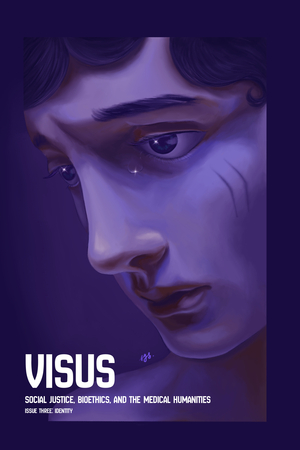
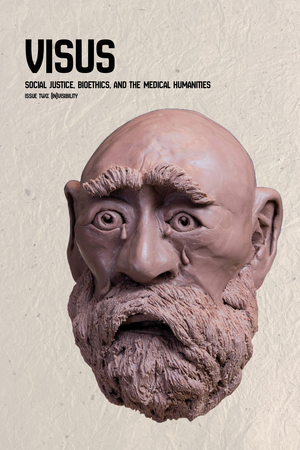
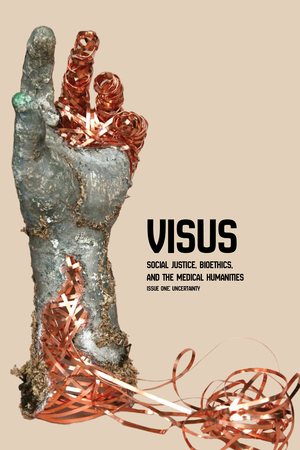
Visus is a journal published by the Center for Moral Values in Health and Medicine at Oakland University. It focuses on social justice, bioethics, and the medical humanities. The journal is composed of artistic, narrative, and expository contributions from student authors. Our mission is to cultivate an intellectual and emotionally-rich community that confronts a range of contemporary challenges in the landscape of health and medicine. Ultimately, we strive to promote critical reflection, dialogue, and to promote community around a passion for ethics and humanism in health and medicine.
Here are links to Visus:
|
Issue 3: Identity |
Issue 2: (In)Visibility |
Issue 1: Uncertainty |
|---|
The Oakland University Philosophy Department offers an undergraduate minor in Bioethics. This minor draws on the traditions of clinical bioethics and medical humanities to prepare students interested in health professions to address ethically pressing issues in their careers. The Philosophy Department has structured the minor so it fits seamlessly into the curricula of programs across the university, including Nursing, Health Sciences, and many programs in the College of Arts and Sciences (especially Biomedical Sciences).